
Fire Damage Restoration in Olympia, WA
When the fire department leaves, the damage does not stop. Soot is acidic and keeps etching glass, metal fixtures and grout for as long as it sits. The water used to put the fire out soaks into subfloor, insulation and framing, and through an Olympia winter it does not dry out on its own. Smoke odor travels through wall cavities and ductwork into rooms the flames never touched. What happens in the first 48 hours decides how much of the house gets cleaned and how much gets replaced.
We dispatch to Olympia and the rest of Thurston County around the clock. Call 206-621-7774 any hour of the day or night. IICRC certified, insurance billed directly, working the South Sound since 2007.
What We Do First
If the structure is open, we board it up so the weather does not add to the loss. Then a written damage assessment, laid out the way your insurance adjuster needs to see it. Soot and residue removal comes next, matched to the surface and the type of residue. Dry soot, oily soot and protein residue from a kitchen fire each need a different method, and the wrong one sets a stain permanently. Where rooms need clearing, contents are packed out, inventoried and cleaned off site.
Firefighting water is treated as its own job: extraction, structural drying, and daily moisture readings until framing and subfloor are back to normal. A fire-damaged house that stays wet becomes a mold job a few weeks later. Smoke odor is removed at the source by cleaning and sealing the affected surfaces, not covered up with fragrance.
What Olympia’s Housing Stock Means for a Fire
Olympia is older than its newer subdivisions suggest. The city’s own context statement on residential development tracks the pattern: Craftsman bungalows through the 1910s to 1930s, including more than 300 homes in South Capitol near the Capitol campus, then minimal-traditional houses in the 1940s, then the ranch and split-level tracts that filled southeast Olympia between 1951 and 1975. The older blocks of the Eastside, the Westside, Bigelow and Northeast Olympia come from that same pre-war period.
Each era brings its own fire risks, and they shape both how a fire spreads and what restoring the house involves.
- Knob-and-tube wiring in the oldest houses. Knob-and-tube depends on open air around the conductors to shed heat, so insulation packed around it is a problem. Washington’s electrical code, WAC 296-46B-394, allows loose or rolled insulation in a space with existing knob-and-tube only when a licensed electrical contractor has surveyed the wiring and certified its condition, and it prohibits foam insulation over it outright. If an older Olympia house has had insulation blown into the attic since it was wired, that is worth an electrician’s visit.
- Aluminum branch wiring from 1965 to the mid-1970s. The U.S. Consumer Product Safety Commission reports that homes wired in that window may have aluminum branch circuits, which can overheat at outlets, switches and junction boxes as the connections deteriorate. That window overlaps much of southeast Olympia’s ranch and split-level construction.
- Wood heat and old brick chimneys. According to ORCAA, the regional clean air agency, about half the homes in its coverage area have some kind of wood-burning device, and fires left to smolder overnight build up creosote in the flue. Olympia adds a local complication. Unreinforced brick chimneys around Puget Sound have been damaged in successive earthquakes: a USGS survey after the 2001 Nisqually quake, which struck about 17 km from Olympia, counted more than 1,500 damaged chimneys in the Seattle area alone and notes the same pattern after the 1949 and 1965 quakes. A cracked flue liner can let a chimney fire reach the framing around it, so an old chimney that has not been inspected in years is worth checking before burning season.
- Apartments and shared walls. Census QuickFacts puts Olympia’s owner-occupancy rate at 49.8%, so about half the occupied homes in the city are rentals, many of them in apartment buildings. In a multi-unit fire, smoke moves through shared attics and wall cavities into neighboring units, and restoration means working with the owner, the tenants and more than one insurance policy at once.
What to Do Before We Arrive
- Stay out until the fire department clears the building. Hot spots hide in wall cavities and attics.
- Do not wipe or scrub soot. Dry soot can be lifted off a surface; smeared soot sets into paint and fabric.
- Keep the furnace and any exhaust fans off so soot is not pulled through the ductwork.
- If a window or part of the roof is open, tell us when you call. From October through spring, rain is likely, and board-up and tarping come first.
- Photograph every room before anything is moved, and keep damaged items until they have been inventoried for the claim.
- If the fire started at a wood stove or fireplace, do not light it again until the chimney has been inspected.
Working With Your Insurer
A fire claim usually covers two things: the structure and its contents. We document both from the first visit, with photos, moisture readings and an itemized scope, and bill your insurance company directly. If you rent, your landlord’s policy covers the building and your renter’s policy covers your belongings, and we work with both.
Serving Olympia and Thurston County
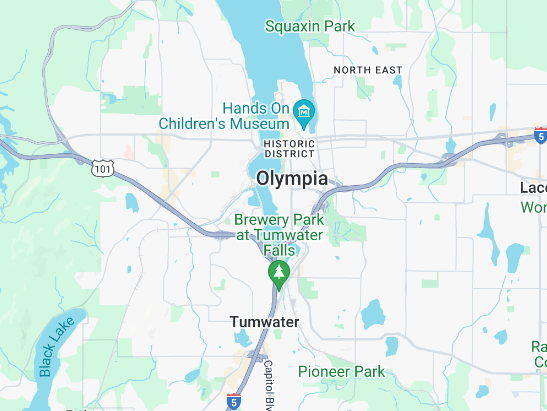
We cover all of Olympia, including Downtown, South Capitol, Bigelow Highlands, the Eastside and Upper Eastside, the Westside, Northeast, Carlyon North, Wildwood, Goldcrest, Cooper Point, Burbank Elliott and Southwest Olympia, plus neighboring Lacey, Tumwater, Yelm and Tenino. The same crews handle water damage in Olympia, which matters when the water used to fight a fire turns out to be the bigger part of the job.
For emergency fire and smoke damage service in Olympia, call 206-621-7774 or toll-free 866-618-7774, day or night.
Olympia Neighborhoods & Surrounding Areas We Serve
Olympia's downtown historic core, hillside neighborhoods around Bigelow and the Eastside, and waterfront homes near Budd Inlet each present distinct fire-restoration challenges — from old-construction smoke remediation to chimney-fire structural loss. Our certified crews dispatch across every Olympia neighborhood and the surrounding Thurston County.