



If your water heater just burst or flooded the house: turn off the power or gas to the heater, close the cold-water valve on top of the tank, stay out of wet rooms with outlets or cords, photograph everything, report it to your insurer, and get the water out and drying started. In Washington, homeowner insurance often covers sudden, accidental water damage like this. It usually does not cover the water heater itself, or damage from a leak that went on slowly.
A tank water heater holds a lot of hot water, and when it fails it does not stop at the tank. The cold-water line keeps refilling it until someone shuts it off, so the water keeps running across the garage slab, into basement carpet or through the floor of an upstairs closet. Here is what to do in the first hour, and how insurance usually treats it in Washington.
In this guide
- Turn off the power or gas
- Shut off the water
- Photograph everything before it moves
- Report it to your insurer
- Get the water out and the drying started
- What insurance covers, and what it usually doesn’t
- Washington claim rules that help you
- Replacing the heater: strapping and age
Also: common questions · sources
1. Turn off the power or gas
Water heater manufacturer A.O. Smith puts this first. For an electric heater, switch off the breaker labeled for the water heater; if you are not sure which it is, shut off the main breaker. For a gas heater, close the shut-off valve on the gas pipe. If you smell gas, or you are unsure, leave the house and call your gas utility (A.O. Smith).
A.O. Smith also warns that water near electrical parts is a shock hazard, and that water near a gas burner can interfere with combustion and create a carbon monoxide risk. Keep everyone out of any room where water is near outlets, cords or electrical equipment.
2. Shut off the water
Turn the cold-water valve on the inlet pipe clockwise until it stops. If there is no valve on the heater, close the main shutoff for the house. The tank stays hot for hours, so let it cool before anyone drains it (A.O. Smith).
3. Photograph everything before it moves
Before anything is mopped, moved or thrown out, take photos and video of:
- the water heater, including the label with its model and serial number, and where the water is coming from;
- the standing water and how far it reached;
- wet flooring, the bottom of the walls, and anything on the floor that got soaked;
- the room below, if the heater is on an upper floor.
4. Report it to your insurer
Washington’s Office of the Insurance Commissioner says homeowner insurance often covers sudden, accidental water damage, but that insurers expect you to report the leak quickly and follow their guidance on repairs. It also warns that insurance won’t cover water damage if you delay repairs (OIC). Call your insurer or agent the same day, write down the claim number, and ask how they want the drying and repairs handled.
5. Get the water out and the drying started
The EPA’s water damage guidance works to a 24 to 48 hour window for cleanup and drying, and warns that even if materials are dried within 48 hours, mold growth may have occurred (EPA). It is specific about what can be saved:
| Material | EPA guidance |
|---|---|
| Carpet and backing | Extract the water, run dehumidifiers and dry within 24–48 hours |
| Ceiling tiles | Discard and replace |
| Wallboard (drywall) | May be dried in place if there is no obvious swelling and the seams are intact; if not, remove and replace |
Source: EPA, Mold Remediation in Schools and Commercial Buildings, Chapter 4.
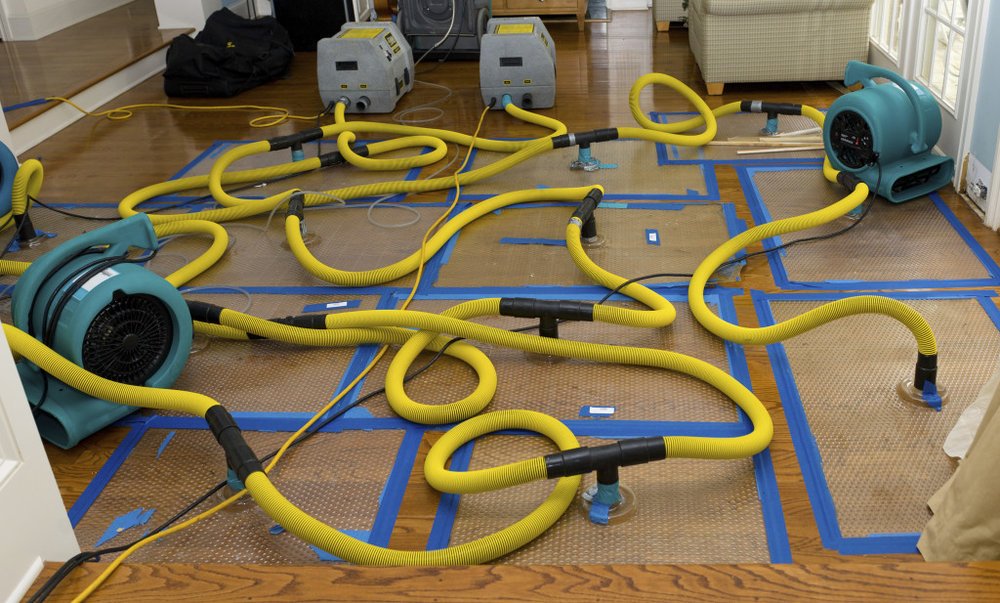
Water also wicks up drywall and spreads under flooring past where you can see it. A fan on a wet basement carpet dries the surface, not the pad or the bottom of the wall. That is the job our crews do: water heater leak and flood cleanup with extraction, moisture mapping with thermal imaging and moisture meters, and structural drying, 24 hours a day across King, Pierce, Snohomish and Thurston counties.
6. What insurance covers, and what it usually doesn’t
Every policy is different, and yours decides. In general:
| Situation | How it is usually treated |
|---|---|
| The tank bursts or a fitting suddenly gives way, and water damages floors, walls and belongings | Sudden, accidental water damage is often covered (OIC) |
| A slow drip soaked the floor or wall over weeks or months | Gradual leaks are usually not covered; insurers treat them as maintenance problems (OIC) |
| Repairing or replacing the water heater itself | The appliance itself is generally not covered (Farmers Insurance) |
| Mold | Coverage is usually limited, and only when the mold comes from a covered loss (OIC) |
The practical point: a sudden failure caught and dried quickly is the strongest kind of water claim. Waiting, or letting a slow leak go, is how coverage gets lost. If you are not sure how your policy treats water damage or mold, the Commissioner’s advice is to ask your agent.
7. Washington claim rules that help you
New claim-handling rules from the Insurance Commissioner took effect on 18 October 2026 (rulemaking R 2025-05). On a water damage claim they mean:
- Five business days to approve drying. Where your policy requires you to protect the property from further damage, the insurer must approve your scope of mitigation, or give you an approved scope, within five business days of receiving it (WAC 284-30-330).
- Reasons in writing. If the insurer rejects that scope, it must explain why and itemize the disputed amounts in dollars.
- Your claim file. You can request your claim file, including adjuster notes, estimates and photographs, and receive it within 15 business days (WAC 284-30-340).
More detail is in our guide to Washington’s 2026 water damage claim rules. If you have a problem with how a claim is handled, the Insurance Commissioner’s consumer line is 800-562-6900, or you can file a complaint online.
8. Replacing the heater: strapping and age
Replacing the tank is plumbing work. Three things to know when you do:
- The new one has to be strapped. Washington’s plumbing code requires water heaters to be anchored or strapped to resist movement in an earthquake (WAC 51-56-0500).
- Age matters. A.O. Smith says the average tank water heater lasts 8 to 20 years depending on the type, and to start planning for replacement once a unit passes 12 years, even if nothing seems wrong (A.O. Smith).
- Check the lines. The Insurance Information Institute suggests checking the hoses leading to water heaters every year and replacing any that are cracked or leaking (Triple-I). The Commissioner lists maintaining your water heater among the ways to prevent leaks.
Water Heater Flood Questions
Short answers, with the source behind each one.
Does homeowners insurance cover a burst water heater in Washington?
The water damage from a sudden burst is often covered; Washington’s Insurance Commissioner says homeowner insurance often covers sudden, accidental water damage (OIC). Your policy decides, so check it with your agent.
Will insurance pay for a new water heater?
Usually not. Policies generally pay for the damage the water caused, not for repairing or replacing the appliance that failed (Farmers Insurance).
Is a slow water heater leak covered?
Most homeowner policies don’t cover gradual leaks; insurers generally treat them as maintenance problems (OIC).
How fast does a flooded basement need to be dried?
The EPA’s water damage guidance works to a 24 to 48 hour window, and notes that mold may grow even when materials are dried within 48 hours (EPA). Start the same day.
What should I turn off first when a water heater leaks?
The power (the breaker) or the gas valve, then the cold-water valve on the inlet pipe. If you smell gas, leave the house and call your gas utility (A.O. Smith).
What if my insurer is slow to approve drying?
Since 18 October 2026, Washington insurers must approve a mitigation scope, or give you an approved one, within five business days of receiving it, where your policy requires you to protect the property (WAC 284-30-330).
Sources
Official and manufacturer sources behind this page, checked 18 November 2026. Insurance information is general: your own policy decides, so check it with your agent.
- Washington State Office of the Insurance Commissioner: Leaks, water damage and mold — what homeowner insurance usually covers, gradual leaks, reporting quickly, mold limits
- A.O. Smith: What to do when your hot water heater is leaking — shutting off power, gas and water; safety hazards; typical water heater lifespan
- U.S. EPA: Mold Remediation in Schools and Commercial Buildings, Chapter 4 — the 24 to 48 hour response window and what to dry or replace
- WAC 51-56-0500, Washington’s amendments to the Uniform Plumbing Code (section 507.2) — water heaters must be anchored or strapped against earthquake movement
- Farmers Insurance: Does homeowners insurance cover water damage? — repairs to the failed appliance itself are not covered
- Insurance Information Institute: How to protect your home from water damage — checking the hoses leading to water heaters every year
- Washington State Office of the Insurance Commissioner: Rulemaking R 2025-05 — claim-handling rules in effect 18 October 2026
- WAC 284-30-330 — five business days to approve a mitigation scope; reasons and itemized amounts if rejected
- WAC 284-30-340 — your right to your claim file within 15 business days
Water heater flooded your home right now?
Our crews answer 24/7 across King, Pierce, Snohomish and Thurston counties. See our water heater leak and flood cleanup, water damage restoration and insurance claim help.