



When a water heater lets go, the water runs wherever the floor takes it: across the garage slab, into basement carpet and pad, under laundry room flooring and into the bottom of the drywall. Stopping the leak and replacing the tank is plumbing work. Getting the water out and the house dry, fast, is ours. Call 206-621-7774 any time, day or night.
Water Heater Leaking Right Now? Do This First
- Turn off the power or gas. For an electric heater, switch off the breaker labeled for the water heater. For gas, close the shut-off valve on the gas line. If you smell gas, leave the house and call your gas utility (A.O. Smith).
- Shut off the water. Turn the cold-water valve on the inlet pipe clockwise until it stops. If there is no valve there, use the main shutoff for the house.
- Stay clear of electricity. Keep out of any room where water is near outlets, cords or electrical equipment.
- Careful with the hot water. The tank stays hot for hours. Let it cool before anyone drains it.
- Take photos and video of the water, the tank and everything wet, then report the leak to your insurer. Washington’s Insurance Commissioner says insurers expect sudden leaks to be reported quickly (OIC).
- Call us at 206-621-7774. We can start extraction and drying while you line up the plumber.
Water Heater Flood Cleanup, Start to Finish
Everything after the leak is stopped, from the first gallon out to the last wall put back.
Emergency Water Extraction
Truck-mounted extraction pulls the standing water off slabs, carpet and flooring so drying can start. Crews dispatch 24/7.LEARN MOREMoisture Mapping & Thermal Imaging
Water wicks up drywall and spreads under flooring past where you can see it. We find the wet edges with thermal imaging and moisture meters.LEARN MOREStructural Drying & Dehumidification
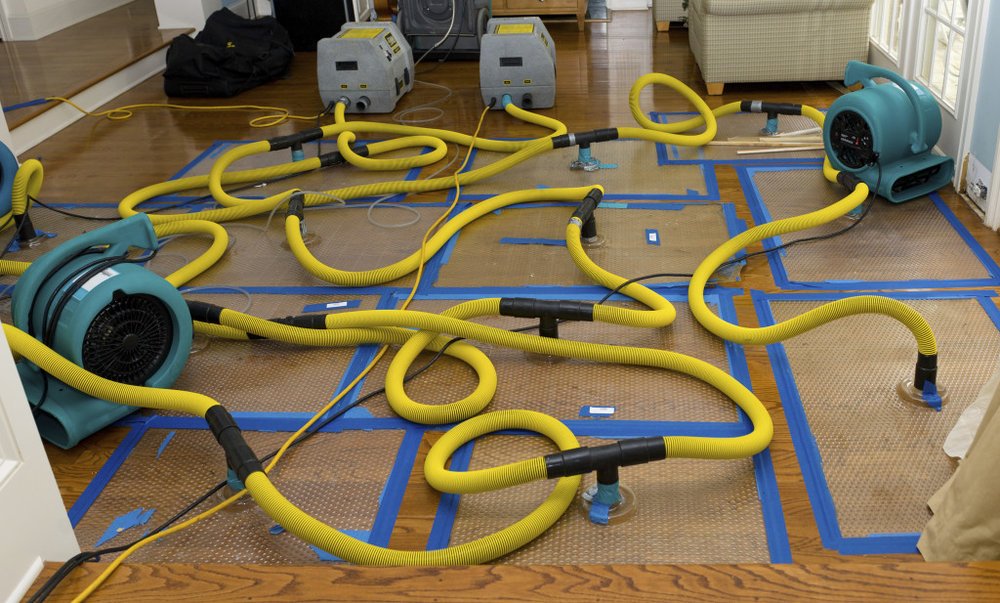
Air movers and dehumidifiers dry the framing, subfloor and walls, and moisture readings tell us when they are actually dry.LEARN MOREMold Prevention & Remediation
The EPA’s water damage guidance works to a 24 to 48 hour window, and warns mold can start even within 48 hours. If it already has, our mold team handles it.LEARN MOREInsurance Claim Documentation
We document every stage of the job for your insurer and work directly with your insurance company.LEARN MORERepair & Rebuild
Extraction, drying and rebuild under one scope, so you are not coordinating separate contractors.LEARN MOREBasement, Garage or Finished Room: Where the Water Goes
Where the heater sits decides how far the water travels and what we check.
- Basement. Water collects at the lowest point and soaks into carpet and pad, the bottom of finished walls and anything stored on the floor. Dehumidifiers do most of the drying down there.
- Garage. Much of the water runs across the slab, but it also soaks into boxes on the floor and the base of any wall shared with the house. We check the house side of that wall, too.
- Closet or utility room upstairs. A heater on an upper floor sends water through the floor into the ceiling, insulation and rooms below. Those get checked even when they look dry.
Fast Response, in Our Clients’ Words
Three water losses from our Google reviews, including a water heater that failed over a holiday weekend. Names are shortened; the full reviews are public.
Water heater leak over a holiday weekend
A water heater failed in an office building over a long holiday weekend and was not found until people came back.
“They responded immediately and were onsite within a few hours… very respectful of our tenants throughout the process. They communicated with me every step of the way which helped me keep my tenants updated.”
— Doug B., office building owner, Google review
Freeze burst a pipe and flooded four units
A pipe broke during a freeze and flooded four condos, including a ground-floor unit with damage to ceilings, walls and floors.
“Scott and team arrived on site within hours of the water leak being detected… instrumental in drying out my unit and working with our HOA and contractors.”
— John A., condo owner, Google review
Overflow into the unit below
An overflowing sink sent water through the floor into the condo underneath.
“They were so responsive, assessed the damage, came up with a plan, didn't take short cuts…”
— Mary D., condo owner, Google review


Is Water Heater Damage Covered by Insurance?
Often the water damage is and the water heater is not. Washington’s Insurance Commissioner says homeowner insurance often covers sudden, accidental water damage, but most policies don’t cover gradual leaks, which insurers treat as maintenance problems (OIC). The appliance itself is generally not covered (Farmers Insurance). Your own policy decides, so check it with your agent. More in our guide: what insurance covers when a water heater floods your home in Washington.
- A tank that bursts or a fitting that suddenly gives way is the sudden kind. A slow drip that has soaked a closet floor for months is the gradual kind.
- Report it quickly and follow your insurer’s guidance. The Commissioner warns that insurance won’t cover water damage if you delay repairs.
- Mold coverage is usually limited, and only applies when the mold comes from a covered loss. Drying fast protects the house and the claim.
- Insurance claim specialists: we document the damage and the work, and deal directly with your insurer.
Wet Drywall, Carpet and Ceilings: Dry or Replace?
The EPA's water damage guidance sets out what to do with common building materials once they get wet.
| Material | EPA guidance |
|---|---|
| Carpet and backing | Extract the water, run dehumidifiers and dry within 24–48 hours |
| Ceiling tiles | Discard and replace |
| Wallboard (drywall) | May be dried in place if there is no obvious swelling and the seams are intact; if not, remove and replace |
| Sewage-contaminated water | Treat as contaminated: OSHA requires personal protective equipment and containment |
Source: EPA, Mold Remediation in Schools and Commercial Buildings, Chapter 4. Hidden moisture is found with thermal imaging and moisture meters; sewage losses go to our sewage cleanup team.
Replacing the Water Heater: Strapping and Age
- The new one has to be strapped. Washington’s plumbing code requires water heaters to be anchored or strapped to resist movement in an earthquake (WAC 51-56-0500). If yours failed and is being replaced, the new one must be.
- Age matters. A.O. Smith says the average tank water heater lasts 8 to 20 years depending on the type, and to start planning for replacement once a unit passes 12 years (A.O. Smith).
- Check the hoses and lines. The Insurance Information Institute suggests checking the hoses leading to water heaters every year (Triple-I).
Water Heater Flood Questions
What homeowners ask us most after a water heater leak.
Should I turn off a leaking water heater?
Yes. Turn off the breaker (electric) or close the gas valve (gas), then close the cold-water valve on the inlet pipe. If you smell gas, leave the house and call your gas utility.
Can I just mop up and run a fan?
A small puddle on a bare slab, maybe. Once water reaches carpet, drywall or a finished floor, it is usually under the surface too. We measure it with moisture meters and thermal imaging so nothing gets closed up wet.
How fast does it need to be dried?
The EPA’s water damage guidance works to a 24 to 48 hour window for cleanup and drying, and notes that mold may grow even when materials are dried within 48 hours (EPA). That is why we answer 24/7.
Does homeowners insurance cover water heater damage?
Sudden, accidental water damage is often covered; gradual leaks and the heater itself usually are not. Check your policy with your agent.
Do you work with my insurance company?
Yes. We document every stage of the job for your insurer and work directly with your insurance company.
What areas do you cover?
Homes across King, Pierce, Snohomish and Thurston counties, 24 hours a day. Call 206-621-7774.
Sources
Official and manufacturer sources behind this page, checked 18 November 2026. Insurance information is general: your own policy decides, so check it with your agent.
- Washington State Office of the Insurance Commissioner: Leaks, water damage and mold — what homeowner insurance usually covers, gradual leaks, reporting quickly, mold limits
- A.O. Smith: What to do when your hot water heater is leaking — shutting off power, gas and water; safety hazards; typical water heater lifespan
- U.S. EPA: Mold Remediation in Schools and Commercial Buildings, Chapter 4 — the 24 to 48 hour response window and what to dry or replace
- WAC 51-56-0500, Washington’s amendments to the Uniform Plumbing Code (section 507.2) — water heaters must be anchored or strapped against earthquake movement
- Farmers Insurance: Does homeowners insurance cover water damage? — repairs to the failed appliance itself are not covered
- Insurance Information Institute: How to protect your home from water damage — checking the hoses leading to water heaters every year
Water Heater Flood Cleanup Across the Puget Sound Region
King County
Seattle, Bellevue, Kent, Renton, Issaquah, Sammamish, Burien, Kirkland, Redmond, Newcastle, SeaTac, and surrounding cities.
View coverage →Snohomish County
Everett, Lynnwood, Bothell, Marysville, Woodinville, and surrounding North Sound communities.
View coverage →Thurston & South Sound
Olympia, Federal Way, Auburn, Green River valley, and nearby South Sound communities.
View coverage →